
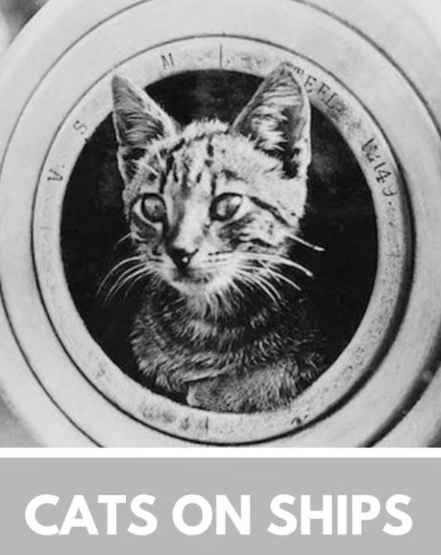
In 1780, a London broker told a client his claim came down to one question. Were there cats on the ship?
The client, John MacLean of Leith, had a cargo damaged by rats. His broker, George Grant, gave him the bad news first. Rats were a misfortune goods could suffer just as easily in a warehouse, so the insurance policy did not cover them.
The question was whether the ship would pay instead.
Grant had asked around the market. His answer, in his own spelling, was that if the captain “had no Catts on Board nor took no other Method to destroy these Vermin,” everyone he had spoken to agreed “the Ship must pay the damage.”
Then he passed on a story one gentleman had told him. About forty years earlier, a ship’s owner had taken his own captain to court over damage caused by rats on board. The only thing that saved the captain was bringing one of the ship’s crew into the courtroom “with Catts in a bag.” Otherwise, the ship would have been liable.
Hannah Farber of Columbia University, who spoke at our Dallas Insurance Inn of Court this year, tells this story in Underwriters of the United States. Grant’s letter survives in his sale book at the Huntington Library.
I love it because it is still how these disputes are won. The side that brings the proof into the room usually wins.
For a property owner today, the cats in the bag are the maintenance logs, the inspection reports, the dated photographs and the emails that show what you knew and when you acted. Owners who keep them walk into the room with the answer. Owners who do not are left telling the story second-hand.
This is one of many stories from Professor Hannah Farber’s Underwriters of the United States.