
The Law of Diffusion of Innovation describes why some ideas gain widespread adoption while others fail.
Early adopters embraced Reference Based Pricing (RBP) strategies as far back as 2007 and have enjoyed great success containing medical costs. Now, two decades later, RBP plans remain few in number capturing less than 10% market share.
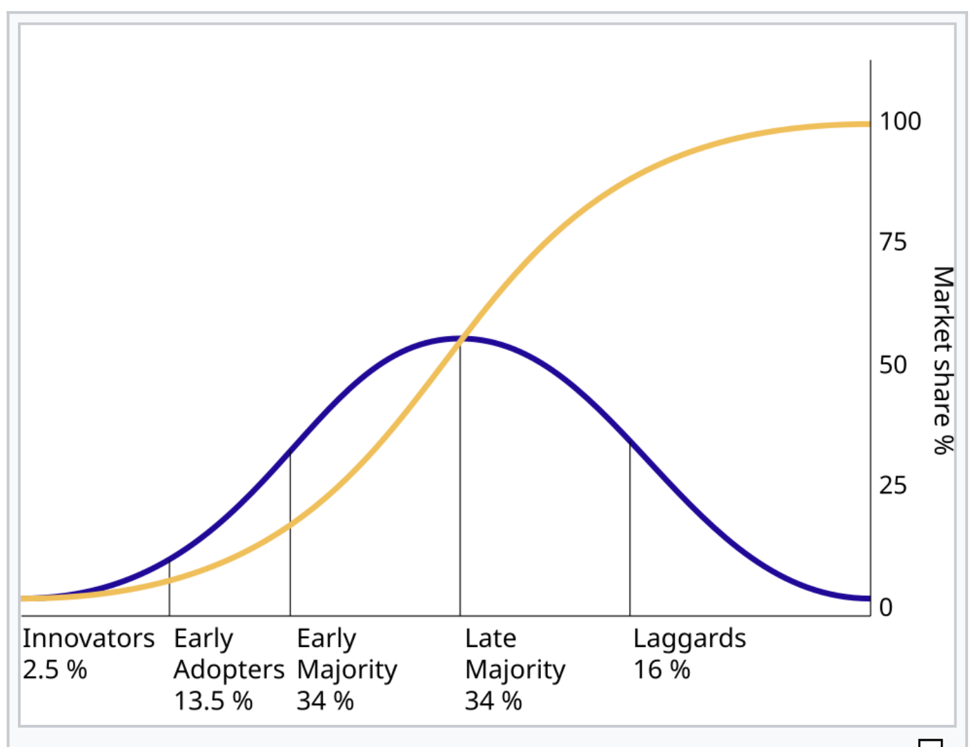
“A new innovation must be widely adopted in order to self-sustain. Within the rate of adoption, there is a point at which an innovation reaches critical mass.” – Wikipedia
There is no question Reference Based Pricing has not gained widespread adoption. Critical mass has yet to be achieved.
The short video shown above may help explain why. It revolves around The Law of Diffusion of Innovation which describes why some ideas gain widespread adoption while others fail.
The Difference Between Pricing Methods – Reference Based Pricing vs PPO

Green Line: Hospital cost as reported to CMS. Reference Based Pricing tags reimbursement at the green line plus a margin. Insurance rates remain essentially static.
Red Line: Hospital (Chargemaster) billed charges. PPOs tag to the red line minus a discount. Insurance rates go up every year.
The difference between the green and red lines is The Spread. That’s where third party intermediaries make money disguised as a claim cost.
Here’s an example:

Alleged in this lawsuit, Aetna charged Weslaco ISD 9.7% of savings as a network access fee. This illustrates the importance of chargemaster rates in the health care industry. Third party intermediaries and their hospital partners rely on them as an important source of revenue.
The higher the chargemaster rate the greater the savings (and fees to be earned) off a discount. For example, a 50% discount off $100,000 billed charge is greater than a 50% discount off a $80,000 billed charge. The higher the chargemaster rate, the more the contract holder can make in “shared savings.”